Wednesday, October 10, 2012

About the Alzheimer's Reading Room


The goal of the Alzheimer's Reading Room is to Educate and Empower Alzheimer's caregivers their families, and the entire Alzheimer's community.

In the Alzheimer's Reading Room (ARR), we offer "real life" solutions to problems that Alzheimer's caregivers face each day.

About Alzheimer's Reading Room

The website contains a knowledge base of more than 3,800 articles. These articles can be found via a keyword search using the search box on the right hand side of every webpage. We add new information to the knowledge base every day.


Read More about the Alzheimer's Reading Room

Tuesday, August 07, 2012

Alzheimer's Disease Research Centers


The Alzheimer's Disease Research Centers around the country can be a useful source of care and information for Alzheimer's caregivers and their families.

Alzheimer's Reading Room

I often receive emails asking me how to find someone that is experienced in the diagnosis of dementia, or for other Alzheimer's related problems. When this happens, the first thing I do is ask them their location.

There are about 30 Alzheimer's Disease Research Centers (ADRC) around the country. When most people think ADRC they think research. However, most ADRCs have doctors in practice and practicing neurologists.


These centers can be very helpful to families, and I suggest if you have a problem or question you contact them.

Monday, August 06, 2012

Alzheimers Disease Statistics

Each day on average, 1,252 people are diagnosed with Alzheimer's disease in the United States.
Each week on average, 8,764 people are diagnosed with Alzheimer's disease.


While many New Yorkers are commuting to and from work each day, another 154 persons are diagnosed with Alzheimer's disease.....

Read more about this Sobering Statistic.


_____________________________________


More than half of Americans report that they have been touched by someone (living or deceased) who has Alzheimer's disease, and roughly a third of Americans are worried about getting Alzheimer's.

Learn more about Americans Touched by Alzheimer's.

Tuesday, April 12, 2011

Learning How to Communicate with Someone Suffering From Alzheimer's Disease

As I thought about this I came to a simple conclusion. Instead of trying to change Alzheimer's World, instead of trying to fight Alzheimer's World, not only would I accept Alzheimer's World as a reality, I would go into Alzheimer's World and learn how to communicate effectively...
By Bob DeMarco
Alzheimer's Reading Room

Earlier today, Carole Larkin published an interesting article -- How the Loss of Memory Works in Alzheimer’s Disease, and How Understanding This Could Help You.

Thursday, September 16, 2010

Reading, Engaging, and Communicating with an Alzheimer's Patient (Podcast))

By Bob DeMarco

Take the extra step. Walk the extra yard. Engage. Keep on living. Don’t be afraid to try things. Do things that you have always done together. Don’t let anyone discourage you or get in your way.

Monday, May 24, 2010

2-1-1 Get Help

Every hour of every day, hundreds of people need essential human services - they are looking for training, employment, food pantries, help for an aging parent, addiction prevention programs for their teenage children, affordable housing options, support groups and ways of becoming part of their community. 2-1-1 allows people to give help and to get help.
clipped from 211us.org
 blog it

Thursday, January 28, 2010

Seventy Percent of Alzheimer's and Dementia Patients Do Not Receive Treatment Early On

Decision Resources, one of the world’s leading research and advisory firms focusing on pharmaceutical and healthcare issues, finds that 70.7 percent of newly diagnosed Alzheimer’s disease patients do not receive treatment within a year of being diagnosed.....
By Bob DeMarco


Sunday, July 19, 2009

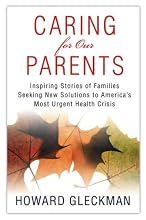
Caring for Our Parents (Book Review)

This is a serious book by an accomplished journalist, writer--Howard Gleckman.

'If you are a Boomer, you should buy this book and put it on the coffee table. You will need it in the future to take care of yourself. The notes section of this book, alone, is worth the purchase price. The 22 pages of notes come in the form of a bibliography that you will be referring to over and over in the years ahead.

Caring for Our Parents is chock full of information and example that you, and I, will need as we age'. --Bob DeMarco, the Alzheimer's Reading Room

Sunday, June 14, 2009

Questions About Test Your Memory (TYM) for Alzheimers and Dementia

On Wednesday, I published an article about a new memory test for Alzheimer's that can be administered in five minutes. The links to the test and scoring sheet are contained in the original article -- Test Your Memory (TYM) for Alzheimer's or Dementia in Five Minutes.

I am receiving emails from readers and I thought I would address two questions.

One reader asked, "I am curious to hear their opinion, about the level of education for the test taker, and its effect on the validity of the test".

Saturday, August 09, 2008

TauRx Therapeutics-- New treatment halts progress of Alzheimer's disease

The results of the Phase 2 study of TauRx's new treatment strongly suggest that it is possible to halt progression in mild and moderate Alzheimer's. TauRx is continuing to refine its treatment and hopes that restoration may be possible at least at the earlier stages with improved versions of its drug. Tangles are already destroying nerve cells in parts of the brain critical for memory in people in their fifties and upwards. The ultimate goal is to develop a product that is convenient for patients that could be widely used at the very earliest stages of the disease, long before patients experience the first symptoms of Alzheimer's.
 blog it


Monday, March 10, 2008

Unraveling Alzheimer's secrets

clipped from www.telegram.com
Kerley, 52, has spent much of her life in the shadow of an illness that gradually destroys memory, personality and the ability to think, speak and live independently. Her mother, grandmother and a maternal great-aunt all developed Alzheimer's disease. Her mother, 78, is in a nursing home in the advanced stages of dementia, helpless and barely responsive.
Currently, the diagnosis is not made until symptoms develop, and by then it may already be too late to rescue the brain.
A radioactive dye called PIB (for Pittsburgh Compound B) has made it possible to use PET scans to find deposits of amyloid, an Alzheimer's-related protein, in the brains of live human beings.
It may lead to earlier diagnosis, help doctors distinguish Alzheimer's from other forms of dementia
"PIB is being used today to help determine whether drugs that are meant to prevent or remove amyloid from the brain are working, so we can find drugs that prevent the underlying pathology of the disease."

blog it


Unraveling Alzheimer's secrets

Scientists searching for ways to detect disease early

By Denise Grady
The New York Times

For a perfectly healthy woman, Dianne Kerley has had quite a few medical tests in recent years: MRI and PET scans of her brain, two spinal taps and hours of memory and thinking tests.

Kerley, 52, has spent much of her life in the shadow of an illness that gradually destroys memory, personality and the ability to think, speak and live independently. Her mother, grandmother and a maternal great-aunt all developed Alzheimer's disease. Her mother, 78, is in a nursing home in the advanced stages of dementia, helpless and barely responsive.

"She's in her own private purgatory," Kerley said.


Kerley is part of an ambitious new scientific effort to find ways to detect Alzheimer's disease at the earliest possible moment. Although the disease may seem like a calamity that strikes suddenly in old age, scientists now think it begins long before the mind fails.

"Alzheimer's disease may be a chronic condition in which changes begin in midlife or even earlier," said Dr. John C. Morris, director of the Alzheimer's Disease Research Center at Washington University in St. Louis, where Kerley volunteers for studies.

Currently, the diagnosis is not made until symptoms develop, and by then it may already be too late to rescue the brain. Drugs now in use temporarily ease symptoms for some, but cannot halt the underlying disease.

Many scientists believe the best hope of progress, maybe the only hope, lies in detecting the disease early and devising treatments to stop it before brain damage becomes extensive. Better still, they would like to intervene even sooner, by identifying risk factors and treating people preventively - the same strategy that has markedly lowered death rates from heart disease, stroke and some cancers.

So far, Alzheimer's has been unyielding. But research now under way may start answering major questions about when the disease begins and how best to fight it.

A radioactive dye called PIB (for Pittsburgh Compound B) has made it possible to use PET scans to find deposits of amyloid, an Alzheimer's-related protein, in the brains of live human beings. It may lead to earlier diagnosis, help doctors distinguish Alzheimer's from other forms of dementia and let them monitor the effects of treatment. Studies with the dye have already found significant deposits in 20 percent to 25 percent of seemingly normal people over 65, suggesting that they may be on the way to Alzheimer's, though only time will tell.

"PIB is about the future of where Alzheimer's disease needs to be," said Dr. William E. Klunk, a co-discoverer of the dye at the Alzheimer's research center at the University of Pittsburgh. "PIB is being used today to help determine whether drugs that are meant to prevent or remove amyloid from the brain are working, so we can find drugs that prevent the underlying pathology of the disease."

Though PIB is experimental now, studies began in November that are intended to lead to government approval for wider use.

Currently, for the most common form of Alzheimer's disease, which occurs after age 65, there is no proven means of early detection, no definitive genetic test. But PIB tests might be ready before new treatments emerge, making it possible to predict who will develop Alzheimer's - without being able to help.

Researchers are also using MRI scans to look for early brain changes, and testing blood and spinal fluid for amyloid and other "biomarkers" to see if they can be used to predict Alzheimer's or find it early.

Studies of families in which multiple members have dementia are helping to sort out the genetic underpinnings of the disease.

Finally, experiments are under way to find out whether drugs and vaccines can remove amyloid from the brain or prevent its buildup, and whether doing so would help patients. The new drugs, unlike the ones currently available, have the potential to stop or slow the progress of the disease. At the very least, the drug studies will be the first real test of the leading theory of Alzheimer's, which blames amyloid for setting off a chain of events that ultimately ruin the brain.

Alzheimer's was first recognized 100 years ago, and in all that time science has been completely unable to change the course of the disease. Desperate families spend more than $1 billion a year on drugs approved for Alzheimer's that generally have only small effects, if any, on symptoms. Patients' agitation and hallucinations often drive relatives and nursing homes to resort to additional powerful drugs approved for other diseases such as schizophrenia, drugs that can deepen the oblivion and cause severe side effects such as diabetes, stroke and movement disorders.

Alzheimer's is the most common cause of dementia (artery disease, Parkinson's and other brain disorders can also lead to dementia). Five million people in the United States have Alzheimer's, most of them over 65. It is the nation's sixth leading cause of death by disease, killing nearly 66,000 people a year and probably contributing to many more deaths. By 2050, according to the Alzheimer's Association, 11 million to 16 million Americans will have the disease.

"Sixteen million is a future we can't countenance," said William H. Thies (pronounced thees), the association's vice president for medical and scientific relations. "It will bankrupt our health care system."

The costs are already enormous, $148 billion a year - more than three times the cost of chronic lung disease, even though Alzheimer's kills only half as many people.

To a great extent, increases in dementia are the price of progress: More and more people are living long enough to get Alzheimer's, some because they survived heart disease, strokes or cancer. It is a cruel tradeoff. The disease is by no means inevitable, but among people 85 and older, about 40 percent develop Alzheimer's and spend their so-called golden years in a thicket of confusion, ultimately becoming incontinent, mute, bedridden or forced to use a wheelchair and completely dependent on others.

"It makes people wonder whether they really want to live that long," Klunk said.

The potential market for prevention and treatment is enormous, and drug companies are eager to exploit it. If a drug could prevent Alzheimer's or just reduce the risk, as statins such as Lipitor do for heart disease, half the population over 55 would probably need to take it, Thies said.

If new drugs do emerge, they will come from studies in patients who already have symptoms, Thies said. But he said the emphasis would quickly shift to treating people at risk, before symptoms set in. Many researchers doubt that even the best preventive drugs will be able to heal the brains of people who are already demented.

Researchers are especially eager to study people like Kerley, because the children of Alzheimer's patients have a higher-than-average risk of dementia themselves, and tracking their brains and minds may open a window onto the earliest stages of the disease.


Wednesday, March 05, 2008

Assisted living costs for Alzheimer's patient is tax deductible

clipped from www.usatoday.com
Q: My mother just went into an assisted living facility due to Alzheimer's. It costs over $4500 per month. Are any portion of these expenses tax deductible?
Answer from AICPA member Kenneth J. Strauss: Sorry about your mother but the good news is that the entire $4,500 is fully tax deductible as a medical expense.

The rules can get pretty complicated but it is clear that Alzheimer's disease is a severe cognitive impairment which is the threshold for determining if the taxpayer is entitled to a full medical deduction.

Like all medical deductions the total amount of medical deductions is an itemized deduction. The medical expenses in excess of 7.5% of her adjusted gross income are deductible.

Depending on how high her income is will determine the full tax benefit. This might be a year to take some extra money from her retirement account. If your mother does not have the resources and you or another family member is paying then you should see if your mom can qualify as a dependent.

blog it

Thursday, October 25, 2007

Evercare Unveils Details Of Nation's First Alzheimer's Disease Special Needs Plan In Phoenix

I am looking forward to learning more about this program. I will investigate when this program might be coming to South Florida.
Evercare, one of the nation's, and Arizona's, largest health care coordination
programs, today unveiled the details of the first-ever Medicare Advantage
Special Needs Plan designed exclusively for people with Alzheimer's disease and
chronic dementia. Residents of Maricopa County, Ariz. will be the first in the
country to have access to this innovative health plan with tailored benefits and
services, including special prescription drug coverage and the Alzheimer's
Association Safe Return® program. Evercare Care Managers will collaborate with
memory disorder specialists from the prestigious Phoenix-based Banner
Alzheimer's Institute, with the goal of enhancing Evercare's innovative model of
care. <BR><BR>The <I>Evercare® Health Plan for People with Alzheimer's Disease
and Related Dementia</I> provides benefits that go beyond traditional Medicare
coverage
 blog it

Wednesday, October 24, 2007

Discovery suggests new ways to treat Alzheimer's cause, not just symptoms

For some time, scientists have blamed Alzheimer's disease on a small molecule called amyloid beta protein (A beta) that leaves large gummy deposits in the brain. Recent studies suggest that these A beta proteins stick together to form floating toxic clumps that kill brain cells. Now, UCLA scientists have identified a tiny loop in A beta as the likely culprit behind the adhesion process.
The UCLA team discovered that gene mutations in A beta increase the loop's flexibility, enabling it to join easily with loops from other A beta proteins and form clumps. The loop also appears in the region of the protein that regulates how — and how much — A beta is made.
Principal investigator David Teplow, professor of neurology at the David Geffen School of Medicine at UCLA, is available for interviews.
The Proceedings of the National Academy of Sciences published the findings in its Oct. 10 online early edition. For a PDF of the study, see www.eurekalert.org/pio/tipsheetdoc.php/237/zpq7481.pdf.
 blog it

Thursday, July 26, 2007

The early signs of Dementia (Alzheimer's)

Looking back, there is little doubt in my mind that if I had had the proper education or information I would have realized my mother was suffering from dementia sooner. Most people like me tend to ignore the symptoms at first believing they are simply signs of "old age". Anyone who ends up in my shoes knows and understands that a person in the early stages of dementia or Alzheimer’s can function with some normality--even drive a car. It is not until they deteriorate or until some "event" takes place that we wake up to reality.

The article on the next page is one of the best I have read. The basic underlying premise is that behavior changes slowly in the elderly and if they begin to suffer cognitive impairment it will be evidenced in behavioral changes. Sometimes these changes can be quite subtle but if detected could raise a “red flag”.

If my mother had been enrolled in any of these studies I feel certain she would have been diagnosed with dementia sooner. This would have allowed me to get her in an exercise program, get her proper nutrition, and insure that she was taking her medicines as prescribed. I leaned in the last three years how important these three factors are in the quality of her life.

My mother turned 91 years old in June and she suffers from Alzheimer’s disease. I am her CarGiver.


I am an Alzheimer's Caregiver: The early signs of Dementia (Alzheimer's)

Saturday, July 21, 2007

Statins that stave off Alzheimer's (Zocor)

"The strength of this study is that it examines the issue with a huge amount of statistical power and uses existing data to look prospectively at Alzheimer’s and Parkinson’s," said lead author Benjamin Wolozin, MD, PhD, a professor of pharmacology at BUSM.

"The strength of reduction of incidence of dementia with simvastatin is striking,".


Researchers from Boston University School of Medicine (BUSM) have found that the statin, simvastatin, reduces the incidence of Alzheimer’s disease and Parkinson’s disease by almost 50 percent. This is the first study to suggest that statins might reduce the incidence of Parkinson’s disease. These findings, will be published in the July online open access journal BioMed Central (BMC) Medicine.

Statins that stave off Alzheimer's

By Nicole Laskowski


Statins May Stave Off Alzheimer’s

What’s up:

If you’re taking a statin to reduce cholesterol, you may also be improving your chances of avoiding certain neurodegenerative diseases. New research from the School of Medicine indicates that simvastatin, a statin sold as Zocor, reduces the incidence of Alzheimer’s disease and Parkinson’s disease by almost 50 percent.

The researchers, led by Benjamin Wolozin, a MED professor of pharmacology, screened the Decision Support System database of the United States Veterans Affairs Medical System, looking for the effects of three statins — simvastatin, lovastatin, and atorvastatin — on the expected incidence of Alzheimer’s disease and Parkinson’s disease. His study of more than 700,000 subjects taking simvastatin showed that the drug reduced the incidence of both Alzheimer’s disease and Parkinson’s disease by almost 50 percent. A study of people taking atorvastatin showed that the drug reduced the incidence of Alzheimer’s disease by almost 10 percent. Lovastatin was not shown to reduce the incidence of either disease.

Wolozin is unsure why simvastatin reduces the incidence of these diseases, but he suspects that because the statin blocks a cholesterol-producing enzyme called HMG-CoA reductase, it may also affect the production of other chemicals. He notes that simvastatin reduces inflammation, and that it increases the production of some growth factors in the brain, which may make neurons more capable of resisting chronic degenerative disease.

What it means to you:

“If you are someone who is at risk for Alzheimer’s or Parkinson’s disease, you should use simvastatin because it could slow the process,” said Wolozin. “Most people currently use atorvastatin, because it is effective at reducing vascular injury related to cardiovascular disease. If your major health risk is cardiovascular disease, you might want to stay with atorvastatin, but if your major health risk is neurodegenerative disease, you might consider switching to simvastatin.”

Word to the wise:

At the moment, researchers recognize a relationship between simvastatin and the onset of Alzheimer’s and Parkinson’s disease. They do not know how this relationship works. Be advised that statins may cause side effects such as headaches, nausea, rash, weakness, and muscle pain.

What’s next: Wolozin hopes to learn to determine how strong the relationship is between statins and degenerative diseases, like Alzheimer’s and Parkinson’s disease. He plans on studying how the drug slows the progression of symptoms by gathering data on when Alzheimer’s and Parkinson’s disease patients, both on and off the drug, meet certain well-known markers of the diseases.


alzheimer's disease, BioMed Central (BMC) Medicine, Boston University School of Medicine, caregiving, dementia, HMG-CoA reductase, lovastatin, simvastatin, statin, zocor